Showing posts with label african. Show all posts

Thursday, 30 August 2007

A love affair with the African Textile - Kuba Cloth


I feel excited as we have just taken delivery of a number of kuba cloths made by the Kuba people of the Democratic Republic of Congo (DRC), in Central Africa. Woven by men and embroidered by women these cloths are generally used for ceremonial purposes.

Kuba cloth is woven from raffia palm leaves and were traditionally used for dance skirts by both men and women. The basic kuba weaving unit, an undecorated square of plain cloth, the mbal was also used as a form of currency in the DRC.

I am a great fan of Kuba cloth; in fact I love Kuba cloth. I think it is one of the most beautiful, regal and amazing textiles I have ever come across. I am not the only one that have been captivated by these cloths, renowned artists such as Pablo Picasso, Henri Matisse and Paul Klee were also fascinated by their beauty and reflected the Kuba cloths distinctive geometric and zigzag patterns in their artwork.

Kuba cloth has a wide appeal and is available in many shops throughout the United States and Europe. I have certainly seen it for sale in the form of cushions and re-upholstered furniture in large retail stores, such as House of Fraser and featured in a number of home décor magazines such as Elle Décor and Living Etc. It has also featured in popular TV shows such as My Wife and Kids, All of us, Frasier and Law and Order. I have to say, whenever we go into a high street shop and see genuine Kuba cloth and other African art it makes us feel happy as it brings the beauty of Africa art and design to a wider audience.

Kuba cloth is as beautiful as it is delicate. Although raffia cloth is generally strong, you will need to treat it with care. Think of it as a long lasting relationship that you would like to preserve. Treat it with respect and it will repond well.

If you are looking for fabric to beautify your home or your surroundings then you will find it in the elegant and timeless Kuba cloth.

See Décor tips on www.kafele.co.uk for ideas on using Kuba cloth.

Wednesday, 20 June 2007

An African New Year


Tomorrow, June 21st marks this year's summer soltice. It is a celebration of the longest day of the year and the beginning of the summer.

The summer solstice means we are 4 minutes short of 15 hours of daylight. What are you going to do with those extra hours of daylight? Lets hope tommorrow is a lovely sunny day so we can use those extra hours to chill out and relax and be happy.

In Kemet (Ancient Egypt), summer soltice was the most important day of the year. The sun would be at its most powerful and the nile river would begin to rise. The people of Kemet held special ceremonies to honour the Goddesss Aset, who was said to be mourning for her dead husband Asar and that her tears caused the Nile to overflow. An Accurate prediction of the floods was such an important event for the people of Kemet, that the appearance of the star Sirius, which occurs around the time of the summer soltice, was seen as the beginning of the Egyptian New Year.

It is said that the summer soltice is a time to be happy. It is a time to get rid of the things you no longer want or causes chaos in your life. Tomorrow, celebrate being happy.

Tuesday, 19 June 2007

The Day of the African Child


Saturday, 16 June 2007, celebrated the Day of the African Child. Apparently, this day has been celebrated every year since 1991 and I am afraid to say, I have only just found out about it.

The Day of the African Child was first initiated by the organisation of African Unity. The day is in honour of the memory and courage of thousands of Black school children in Soweto, South Africa, in 1976, who took to the streets to protest the inferior quality of their education and to demand their right to be taught in their own language. During those two weeks of protest, over one 100 young boys and girls were killed and more than 1,000 injured.

Can anyone remember that day? I can. It's one of those painful and ugly memories that you bury somewhere deep inside until......

Each year the day is associated with a different message. This year UNICEF is drawing attention to the issue of Child trafficking.

I know this day has passed but it is never too late to learn something new or to get involved.

If we don't stand up for children, then we don't stand for much.

- Marian Wright Edelman

Our best seeds and our dearest fields - those are our children

- Cheikh Hamidou Kane

Tuesday, 5 June 2007

SPOTLIGHT ON: HIV/AIDS


May 14th to 20th was Christian Aid week. During that week we saw an interview with one of its ambassadors - R&B star Lemar.

He was talking about this recent trip to Uganda and Ethiopia, the effects on the children of the ongoing civil war in Uganda and the huge problem of HIV and AIDS, including the many children that have lost one or both parents to AIDS.

HIV/AIDS in Africa is a modern day catastrophe - arguably a current holocaust. Over 20 Million African people have already died, 28 million are HIV-positive, over 5000 die everyday. Contrary to popular belief, it is not exclusively an affliction of the poor. It affects artists and aristocrats alike. It particularly flourishes where traditional tribal loyalties have broken down.

Southern Africa is most heavily affected - countries like South Africa, Zambia, Botswana and Zimbabwe - but other African regions don't escape. West Africa - countries like Cameroon, Cote d' Ivoire and Gabon have experienced creeping increases in infection rates. Arcoss Africa, the majority of the people living with HIV/AIDS are between the ages of 15 and 49.

It made us think again about what it is that we need to do to help alleviate the poverty and distress caused by this preventable and treatable disease. In all honesty, the problem is so huge, we have wondered both where to start and what impact we could possibly make. However, one message came through again and again when we looked into things - the situation is tragic but not hopeless.

We can help financially support prevention campaigns and the provision of treatment and care. Ideally financial support should target "grassroots" local organisations. (We thought it best not to recommend ones)

Kafele will be donating money to support "grassroots" individual groups and organisations fighting HIV/AIDS in Africa. In addition, we would like to do more by donating toiletries and medical supplies to an orphanage or hospital/clinic in one or two of the African countries.

We will keep you infomed of our progress with these matters either through the website, blog or our newsletter.

Love Africa, its art and its people.

Wednesday, 7 March 2007

In Celebration of the Women of Africa


The Power comes from women. Even if a man reigns on the throne, one recognizes nevertheless the dignity of the woman as a source of power. It is from her that power emanated.
Banze Mukangala (a luba male office holder)

The 8th March is International Women's Day and although I already know this, I find myself sitting here thinking, a women's life is really tough! We have to be so many things to so many different people and we are expected to balance them perfectly and come out smiling at the other end. Well, I don't know about you but I am exhausted! I have decided that I want to be a man! and have his compartmentalised brain, that can only concentrate on one thing at a time rather than be a woman trying to deal with a multitude of things all at the same time.


When I was growing up, the women that I admired around me, were those that I considered to be very hardworking. They were leaders in their professions. My mother (like most mothers) for instance, was very talented. She was a brilliant chef, a nurse, a cleaner, an accountant, an advisor, a counsellor, a critical friend, a wise woman, and a wife. I admired her dearly and most of all I respected her strength of character.

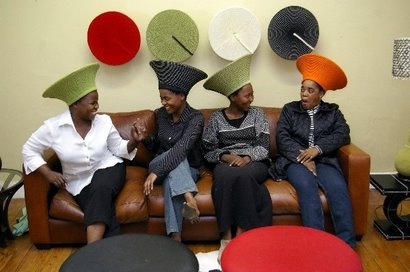
When I look at the Zulu women of South Africa and the Luba women from the Democratic Republic of Congo, I share the same respect and admiration for them acknowledging the different circumstances, vulnerabilities and the roles they played within their respective societies.

Luba women were important members of their society. In Luba art women were held in high esteem, respected and honoured as spiritual magnates. Female representations were in an array of art forms in a wide variety of poses and contexts. They served as priestesses, political advisers, ambassadors, and also as wives and mothers. In addition to these roles, their bodies served as spirit vessels for deceased males;

Only the body of a woman is strong enough to hold a spirit as powerful as that of a king.


Ngeleka (a Luba male titleholder)

Need I say more?

Zulu women also play an important and crucial role within the nation of the Zulu people. These women are the backbone of the family. They undertake all aspects of domestic life as well as raise the children, look after the elderly and still make money for the family with their skilled artistry. In addition to this they often have to undertake hard manual labour, such as growing crops, looking after livestock and chopping and collecting firewood and water. They do all of this whilst their husbands simply go to work in the cities. Most Zulu women are not allowed to go to work, as it is the belief that a women’s place is in the home. However, this is gradually changing in South Africa and more and more women are going to work in the cities.

Zulu women are renowned nationally and internationally for their weaving of the fabulous beer baskets and bowls. With the help of charitable organisations Zulu women have taken their traditional art and turned it into a means of supplementing their incomes.

There we have it, two examples of the power of women. Did I hear someone say......who needs men?

One is not born beautiful, but rather becomes beautiful over the course of a lifetime.

Luba Proverb

Monday, 19 February 2007

Feeling Special for a Week


Today is a week since Valentine's Day. I had asked my customers to follow my recipe for an African themed Valentine's Date. I suggested they:

*Check out some African art at Kafele's;

*Share an intimate meal for 2;

*Watch a romantic African Film or play some romantic tunes. I had recommended
"Say Good-bye" by Howard Hewett. "What, who"? I hear you ask. It's ok, it's a beautiful ballad to wrap yourself in.

*And finally, I had asked for them to celebrate Valentine' Day for the whole week.
Don't you agree that one day is not enough to feel special?


Well, starting backwards. I certainly celebrated it for a week. Jed has been away this week in Belfast sharing his love with a group of young people. This is the longest period of time we have ever been apart. And, I have to say I missed him dearly. We phoned each other every day and expressed some of that love and miss you stuff (sloppy, I know). I also shared this love with my older daughter as she too was away from home.

I listened to Howard Hewitt - on my own (as Jed had gone by then). But ooh! did it sound sweet.

We ate an African/Caribbean meal for 3 at home (with our younger daughter).

We gave a piece of African art (Songye Mask) to a business associate. Simply because he is extremely helpful and such a nice guy.

Remember this is an African Art Retreat and we can do more or less what we like here.

I hope you had a wonderful Valentine's Week.

Thursday, 25 January 2007

African art stirs my soul


So many people have said to me that my eyes light up when I talk about African art. I am beginning to believe this now, as I feel lit up inside when I do speak about it. I am not sure why? Maybe it stimulates and excites me in a way that other mundane things doesn’t. In fact, that’s what it does. It makes me happy. There is no politics in African art, (ok, there is politics in just about everything) but you know what I mean. When I have a conversation with others and their faces appear blank as I go ranting on, it doesn’t matter this is something that I love and it gives me pleasure (selfish of me, I know). What I try to do. No! what I intend to do. No! that’s not right either. What I do when I have a discussion with others about African art is to communicate my passion and fascination with the subject. This is not shallow superficial talk but genuine talk this is who I am talk.

Now, that I have got that out of the way. I wanted to tell you why I have decided to do a BLOG. By the way, Jed doesn’t know what a BLOG is and I can have a little chuckle to myself about that. He is the one that’s supposedly up on technology not me. Anyway, why did I decide to do a blog. Well a couple of people that I know have suggested this to me. I was told it would be one way for me to talk about African art in a chatty informal and heartfelt way.

To be truthful, I avoided doing one at first because I thought this is going to be hard work and what do I have to say that would be of interest to anyone. I am not an expert. I don’t know the arts inside out. To be honest, I read so much about the different pieces, the country of origin and the usages that I get confused on occasions. But hey! When I get it wrong I feel no way about admitting it. It doesn’t matter, as I am not trying to impress anyone.

African art as therapy
A friend of ours came to visit us and his parting remarks were “…your home is very peaceful, you have a wonderful family, you are very lucky.”

And, you know something, I am not one for accepting compliments very well ( I am learning) but you know, what he said is true. I am lucky. The African arts in our home create a real sense of peace. I am convinced that the peace and tranquillity that wraps itself up like an old familiar cuddly blanket around our home emanates from these beautiful pieces of art. Good family and friends enhance this sense of tranquillity and harmony.

Through these pages, I would like to somehow share that sense of peace and tranquility with you. I want to create an African retreat that you can escape to, relax and feel at peace.

My advice to anyone who is feeling stressed or unhappy is to find something or someone preferably a combination of the two to bring you that sense of peace. Try a piece of art. Learn about its origin and significance. I promise you, it will amaze you and learning something new and different is very fulfilling, amazingly empowering and more importantly, very rewarding.

Zulu Hats or Isicholos

Zulu Hats or Isicholos
"It makes me happy" ("Beauty is the promise of happiness") Stendhal - French Author